F&B Is Where Inconsistency Hides Best—and Costs the Most.
Every hotel has a department where standards go to die quietly.
It’s not housekeeping. It’s not the front desk.
It’s food and beverage.
As Jennifer Burgess told Adam Tuttle in our latest Beyond the Binder conversation:
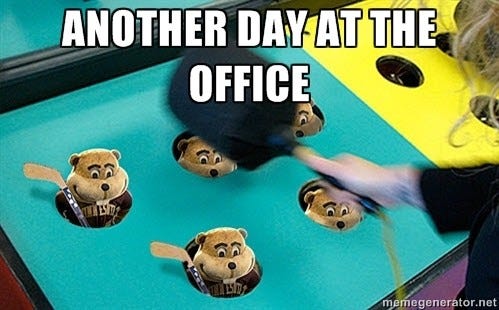
👉 “Everybody in our industry is being stretched super thin. The moment you have a manager running a front door or expediting or running food—every moment they’re not watching and observing and training and coaching during service. Everybody is just stretched super thin and it’s just a game of whack-a-mole to keep operations going.”

Watch the full conversation here. And subscribe to Yipy’s YouTube Channel.
Adam calls this managerial heroics—and it’s killing your consistency.
“We’re all masochists. We jump in. It’s against our nature to let things fail. We’re all people pleasers. So we’re like, ‘Of course I can run the front door and then turn around and expedite.’ We become conditioned to it.”
Jennifer agreed:
“And then we make it work—and we get punished for making it work by never getting more resources. That’s why we have so much burnout in our industry.”
Leaders jumping in to save service. Filling gaps. Running food when they should be coaching behaviors.
It works in the moment. But it breaks everything else.
What Jennifer Burgess Taught Us About Why F&B Breaks First
1. F&B Has More Variables Than Any Other Department
Housekeeping has variance. Front desk has variance.
But F&B exists entirely in the gray.
Jennifer put it plainly:
“In food and beverage, there are infinite variables. It becomes almost impossible to simulate even if you’re doing role playing in a training environment.”
Adam framed the challenge:
“We often use this word—operational variance. We know the expectation. Most good F&B operations know the expectation. But then the circus hits. And there’s this huge gap between ‘this is the expectation’ and ‘this is the reality of what the guest experiences.’”
The guest who wants mashed potatoes instead of spinach. The VIP who arrives unannounced. The server who calls out 20 minutes before a 200-cover night.
You can’t train for every scenario. But you can build systems that create behavioral reliability under pressure.
2. Managers Aren’t Aligned—So Teams Get Mixed Messages
Here’s the iced tea test:
“If you ask 10 servers on the floor how they serve iced tea, you’re going to get 10 different answers. What kind of glass? Does the straw go in? Do we put the lemon wedge in or on the side? Do we use liquid sugar or sugar sugar?”
Now ask 10 managers. You’ll get 10 more answers.
Jennifer described the result:
“I’ve heard so many stories—a server walks through the floor, a manager corrects them. ‘Hey, do this differently.’ They go on their merry way and 10 feet later another manager stops them. ‘No, no, no—do it the other way.’”
Nobody’s doing it wrong. They’re just doing it different.
And different, at scale, is chaos.
Adam connected this to the core problem:
“If we can’t define those expectations so clearly that it doesn’t matter who you talk to, it doesn’t matter which manager’s on shift—we’re all on board, we’re all saying ‘this is how this service is completed’—we will only fall victim to the gap.”
3. Training Checks Boxes—But Doesn’t Change Behavior
Most hotels confuse information transfer with skill development.
Jennifer was blunt:
“There’s a gap between saying something and them learning it. If I say it and check it off my list—I said it out loud, I emailed it, I texted it—that means they’ve learned it? There could not be a greater divide.”
She cited the research: it takes anywhere from 18 to 254 days to form a habit.
Not 21. That number has no science behind it.
Adam added what he’s seen across hotels:
“What we do on paper really well is we say ‘you’re good.’ We check the box—yes, Jen is fully trained. She knows how to clock in, she knows where the garbage is, where the walk-in is. But there’s a check without comprehension. There’s no assimilation.”
The implication? Saying something once—or twice—isn’t training.
It’s wishful thinking.
4. Competence Enables Confidence—Not the Other Way Around
This is the insight most leaders miss.
When your team doesn’t have to think about where the spoon goes, they can focus on the guest.
Adam framed it this way:
“When we can stop thinking about the how, we can start thinking about the why. When I’ve been so focused on defining what our processes and systems are—now I get to do the fun stuff, which is focus on the guest. I can be present. I can notice things. And I’m going to say it: you will never do unreasonable hospitality if you are focused on where does the spoon go. Ever.”
Jennifer agreed:
“The technical stuff should be the easy things I don’t even need to think about. So I can use all that heart and mental space for customizing the guest experience.”
This is the unlock. Competence builds confidence. Confidence enables hospitality.
5. Don’t Hire Out of Desperation—and Don’t Train Out of Desperation
This one stings. But Jennifer didn’t hold back:
“There’s so many times you walk into an operation and they’re scrambling to fill holes with bodies. ‘Okay, you have two hands and a pulse—great, you can clear a table.’”
The logic seems right. The math doesn’t work.
“Incompetence is horrible for morale. It’s horrible for your top performers who are like, ‘Wait—I’m getting the same cut and the same schedule as this guy, and he’s dragging me down.’”
And training out of desperation is just as dangerous:
“You’re hired. I want you to start tomorrow. But Sarah’s our trainer and she’s off today. So why don’t you just trail with Joe? He’s new, so he doesn’t know everything yet...”
Training by telephone. No documentation. No manager involvement.
Then we wonder why consistency collapses.
6. Every New Hire Brings Baggage—Good and Bad
Adam raised a point that often gets overlooked:
“Every time we hire someone, every time we bring someone into the organization, they’re bringing with them all the training, all the experience of all their other past roles. Sometimes it’s helping them leave some of those things at the door. Sometimes it’s helping bring those skills and assimilate them into our establishment. But until we can define who we are, we can’t help them bring all of those things—or leave those things behind.”
You hire someone from Marriott. Someone from Four Seasons. Someone from Aman.
Each delivers service based on where they came from. Well-intentioned, but inconsistent as a whole.
And over time, the hotel’s identity gets lost in translation.
The Real Problem: No System for Constant Gentle Pressure
Jennifer borrowed a phrase from Danny Meyer:
Constant gentle pressure.
“You need to walk in every single day and tell your team this is what I expect from you. Then you need to check it. Then you need to correct and coach and counsel. And you’ve got to be okay saying, ‘You did great yesterday—but today, I don’t know what happened. Let’s talk about how we get you back.’”
Adam connected this to what separates good hotels from great ones:
“Gen Z and Alpha Gen are actually the exact opposite of what people think. They want feedback. But it requires that we also provide the feedback of ‘hey, you’re doing this right.’ The positive reinforcement is what enables us to repeat those behaviors, own those behaviors, and then start to work on other ones.”
This isn’t about being harsh. It’s about being present.
And presence requires a system.
Without one, feedback becomes random. Coaching becomes reactive. And standards drift—between lunch and dinner, between Monday and Friday, between one manager an
Consistency Is a Systems Problem
Hotels don’t fail because they lack standards.
They fail because they lack a system to execute them daily.
Adam put it simply:
“If we want to deliver what we’ve expected, it means our systems have to become so much tighter, so much more robust, so much better. Otherwise, we will fall victim to the gap.”
This is why Yipy was built around a loop—not a library:
👉 Define → Distribute → Do → Diagnose → Develop
Define: Get every manager aligned on what “right” looks like—down to the iced tea.
Distribute: Put standards in leaders’ hands, on the floor, in real time.
Do: Make daily observation and coaching the norm—not the exception.
Diagnose: See where standards are drifting before audits reveal it.
Develop: Use data to coach, not punish.
It’s a living execution system. Not a document repository. Not a checklist app. Not a digitized audit tool.
Jennifer said it best:
“If we’re not communicating what those expectations are—and if every single manager, every single day, every single shift isn’t aligned—we’re all just reacting. Living in a game of whack-a-mole.”
Adam added the sustainability test he learned early in his career:
“I had an amazing mentor who told me: ‘It’s great to train. But really what will show is when they’ve been doing it for a year—are we still doing it the right way?’ If we’re not doing it this way in a year, why are we training to it? We should be training to what’s sustainable.”
Adam added the sustainability test he learned early in his career:
“I had an amazing mentor who told me: ‘It’s great to train. But really what will show is when they’ve been doing it for a year—are we still doing it the right way?’ If we’re not doing it this way in a year, why are we training to it? We should be training to what’s sustainable.”
STANDARDS SLIP-UP #003
The “Follow Sally” Training Model
A new server is hired. The trainer is off. So leadership says:
“Just trail with Joe—he’s been here a few weeks.”
Joe learned from Maria. Maria learned from someone who left six months ago.
No documentation. No manager oversight. No alignment.
Result?
The new hire learns a version of the standards that’s three generations removed from the original.
And when they do something “wrong,” leadership is frustrated.
But leadership never defined “right.”
This is what Jennifer meant:
“So many people are flying by the seat of their pants. I have clients—highest level, world-renowned chefs—who don’t have training manuals. Don’t have documented recipes. If we don’t have systems, how are we even supposed to train to them?”
Adam described the downstream effect:
“It’s training by the game of telephone. Nobody really learns the role to high levels of excellence. There’s no documentation. No manager involved. And then we’re in this perpetual cycle of hiring the wrong people, setting them up to fail, and then they leave. Back to square one.”
WHAT YOU CAN DO TODAY
Here are four actions you can take right now to stabilize F&B training—with or without Yipy:
1. Align Your Managers Before You Train Your Team
Pick one service standard—table maintenance, wine presentation, greeting timing.
Get every manager in a room. Ask them how it should be done.
If you get different answers, you’ve found your problem.
Alignment isn’t a one-time event. It’s a discipline.
2. Replace “Good Job” with Specific Feedback
Jennifer was direct:
“There has to be that consistency—whether it’s the message you’re sending or how you’re following up. But there has to be that culture of feedback from the beginning. The good, the bad, and the ugly.”
Adam reinforced why this matters now more than ever:
“We learned that Gen Z and Alpha Gen actually want feedback. But it requires that we provide the positive feedback too—’hey, you’re doing this right.’ That’s what enables them to repeat those behaviors and own them.”
Ban “good job” for two weeks.
Replace it with:
One specific thing done well
One standard that needs reinforcement
Behavior changes when feedback changes.
3. Build Feedback Into the Shift—Not After It
Don’t wait for performance reviews. Don’t wait for audits.
Jennifer used an analogy that stuck:
“With your children, you’re not going to wait a year to tell your kid about brushing their teeth. You’re going to coach and counsel them every day.”
The same applies to your team.
Daily feedback. During service. In real time.
That’s how habits form.
4. Create a 90-Day Training Rhythm—Then Keep Going
Jennifer outlined what most hotels skip:
“You need a plan for weeks one and two. Then weeks three to nine. Then nine to twelve. And then forever. Training never ends.”
If your training program stops at day 14, you’re not training.
You’re onboarding. And onboarding alone doesn’t build consistency.
The Consistency Dividend
Every property that earns Forbes stars, LQA recognition, or a reputation for excellence has one thing in common:
They didn’t treat consistency as an afterthought.
They built systems to deliver it daily.
Adam shared what he’s observed across every successful property:
“There is something that every property that reaches that goal has in common—it is not treated as an idle task. It’s the day in and day out of: we define excellence, we train for what that looks like, and every day we have something useful in standup. Ideally you get some type of data. You’re not just saying ‘today we should talk about bread plating’—that’s not helpful. You’re drilling into something real and giving feedback on the thing you trained.”
Jennifer closed with the mindset shift:
“The managers I work with—they don’t have the ability to get off the hamster wheel to implement the systems that would get them on the hamster wheel less to begin with. Something’s going to break. And that’s what happens. It breaks.”
That’s the consistency dividend.
It compounds. It builds trust. It creates the kind of guest experience that earns word of mouth.
And it doesn’t happen by accident.

Partner Spotlight: Jennifer Burgess, Plus One Hospitality
Jennifer Burgess has spent her career turning chaotic F&B operations into structured, scalable systems. A Danny Meyer and Union Square Hospitality Group alum, she’s worked with luxury hotel chains, independent restaurants, and world-renowned chefs.
Her philosophy: “I’m good at getting people to want to do what I’m asking them to do.”
That’s not luck. That’s leadership.
Yipy is proud to partner with Jennifer to bring her expertise to hotels ready to stabilize their F&B operations.
Learn more at plus1hospitality.com or connect with Jennifer on LinkedIn.
The 10-Foot Test
One of the fastest ways to diagnose an F&B operation doesn’t involve tasting the food or reading the reviews.
It happens within the first ten feet of walking onto the floor.
Over the years, I’ve developed a simple habit when entering a dining room during service. I watch the managers.
Not the guests.
Not the servers.
The managers.
And I ask myself one question:
Where are they standing?
In strong operations, managers are moving. A LOT!
They’re circulating through the dining room.
Checking table pacing.
Observing how standards are being delivered.
Giving quiet coaching moments between interactions.
You’ll see them stopping briefly at tables, reinforcing service moments with the team, or adjusting the flow of the room before small issues become big ones.
But in struggling operations, something different happens.
Managers tend to anchor themselves in one place.
Behind the host stand.
Next to the POS terminal.
Or on the pass expediting food.
They’re working hard. Often harder than anyone else in the room.
But they’re trapped in the mechanics of service instead of leading it.
Hospitality leaders are helpers by nature. Most of us came up through the ranks running plates, bussing tables, or jumping behind the bar when things got busy. When pressure builds, our instinct is to jump in.
And sometimes that’s exactly what the moment requires.
But when managers spend the majority of service filling operational gaps, three things quietly disappear from the floor:
Observation.
Coaching.
Alignment.
Without observation, standards drift.
Without coaching, habits never improve.
Without alignment, each shift becomes its own version of the operation.
What starts as teamwork slowly turns into improvisation.
And improvisation, at scale, is where inconsistency lives.
The most consistent restaurants I’ve worked with still have managers who help the team. But they protect their primary responsibility during service: leading the floor.
They watch.
They guide.
They reinforce what “right” looks like in real time.
Because in hospitality, standards don’t maintain themselves.
They live or die in the moments when leadership is present enough to notice them.
So the next time you walk into your dining room during service, try the 10-foot test.
Before you look at the food or the guests, look at your managers.
Where they stand will tell you almost everything about how your standards are actually being delivered.