


Every hotel tech conference this year has the same energy. AI is here. Voice agents are answering phones. Work orders are dispatching themselves. Guests are getting instant responses in dozens of languages.
Everyone is excited.
But here is what Mark Cederloff and Adam Tuttle kept circling back to during a recent episode of Beyond the Binder:
AI is not exposing a technology gap. It is exposing an operations gap that has existed for decades.
Before AI can answer the right question, someone has to decide what the right answer actually is. And the faster AI moves, the faster every inconsistency in the operation becomes visible to the guest.
The technology showed up ready. Most hotel operations did not.
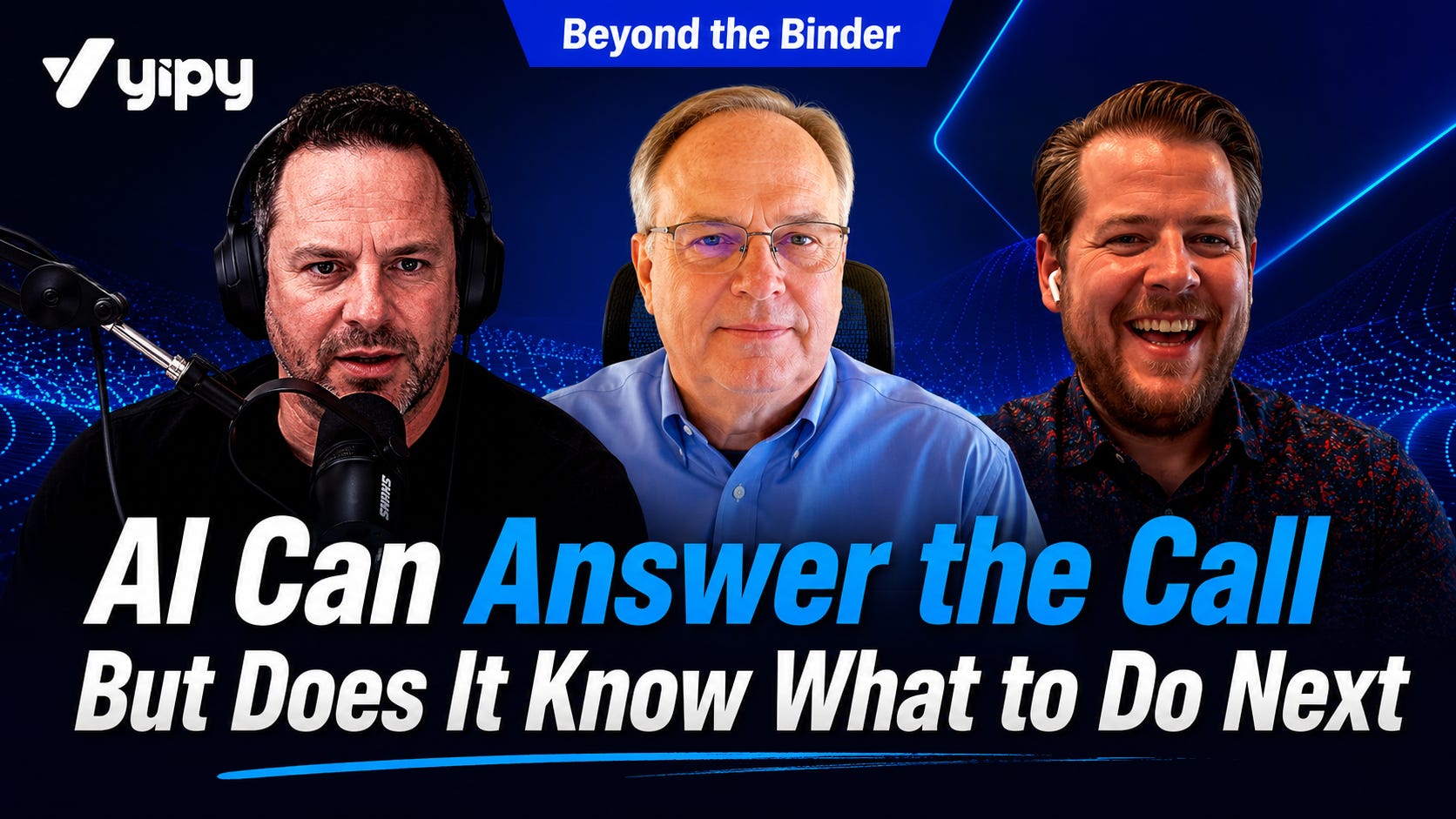
👉 Watch the full conversation here.
What We Learned About AI and Hotel Operations
1. AI Accelerates Whatever Already Exists.
Hoteliers often expect AI to organize the operation. The reality is the opposite. AI faithfully reflects whatever information you give it.
If your website says the restaurant closes at 10, your printed guest guide says 9, and your front desk has been telling guests “it depends on the night” for months, AI does not resolve those conflicts.
It picks one. Or it picks all three. And now the guest gets a confident, immediate, wrong answer.
That is worse than a slow one.
Adam put it plainly during the conversation: AI helps organized operations move faster. Disorganized operations just become confused more quickly.
The question is not whether AI is ready. The question is whether the operational knowledge behind it is ready. The technology has been ready for a while. The bottleneck is the information.
2. Every Hotel Already Has an AI Readiness Test. Most Do Not Know It.
Mark described one of the most common problems his team runs into during implementation.
Ownership approves the technology. Onboarding begins. Then the questions start.
Does the property still offer daily housekeeping?
Where should reservation calls be routed after hours?
Is the laundry room still open to guests, or did that change last quarter?
Nobody is completely sure.
The implementation does not stall because of the AI. It stalls because no one has established a reliable source of operational truth.
Mark’s team has seen this pattern across hundreds of properties. The technology works. The knowledge behind it does not.
That is the real readiness test. Can your operation answer its own questions?
The AI did not create the inconsistency. It just made it impossible to ignore.
3. Guests Do Not Care Who Answers. They Care That Someone Helps.
One of the biggest daily frustrations in hospitality is remarkably simple.
A guest walks to the front desk. The phone rings. The associate now has an impossible choice. Help the person standing in front of them, or answer the phone before the caller hangs up.
Someone loses.
This is the scenario Mark’s team built around. Conversational AI changes that equation entirely.
The phone gets answered immediately. Routine requests are handled in seconds. Extra towels. Directions. Restaurant hours. Done.
When the associate’s attention matters most, they are actually free to give it.
Mark made a point during the conversation that stayed with me. The goal is not to remove the human from the interaction. The goal is to remove the friction that prevents the human from being fully present in the interaction.
That distinction matters.
A guest calling about pool hours at 11 PM does not need warmth. They need an answer. The guest standing at the front desk after a long travel day needs someone who is not distracted by a ringing phone.
The goal is protecting the hospitality. Giving associates the space to do what they got into this industry to do.
4. The Missing Ingredient Is Not AI. It Is Definition.
One line from Adam captured the entire discussion.
“Before AI can help, you have to define the truth.”
Every hotel runs on thousands of standards. Brand standards. Department SOPs. Government regulations. Local operating practices. Manager preferences. Years of oral history passed down shift to shift, person to person.
Most of these standards exist somewhere. The problem is they exist in too many places, in too many versions, owned by too many people.
Without a system that defines which version is correct, AI has nothing reliable to execute against.
The technology can process information at incredible speed. Speed without accuracy just compounds the problem.
This is not an artificial intelligence problem. This is an operational consistency problem. And it existed long before anyone installed a voice agent.
What You Can Do Today
You do not need to wait for a full digital transformation to start closing the gap between what AI thinks your operation looks like and what actually happens on the floor.
Pick one department. One area of the hotel. And answer three questions.
First: Where do your current standards actually live? If the answer is “several places,” you already know part of the problem. Multiple versions in multiple locations means no one can say with certainty which version is correct.
Second: Ask a frontline associate a specific operational question. Not a test. A real question about how something works at your property today. Compare their answer to what your documentation says. Compare both to what your website says. If all three match, you are ahead of most hotels. If they do not, that is the gap AI will amplify the moment you turn it on.
Third: Identify the standards that exist only as tribal knowledge. The things everyone “just knows” but no one has written down or formalized. Those are the standards most likely to break when a key person leaves, a new team member starts, or an AI agent tries to answer a guest question at 2 AM.
This is not about perfection. It is about establishing a starting point. The hotels that will get the most out of AI are the ones that do this work first.
The Bottom Line
The hospitality industry does not need AI that invents better answers. It needs AI that can consistently deliver the right ones.
The winners will not be the hotels that adopt AI first. They will be the hotels that define their standards first, organize their operational knowledge, and establish a single source of truth before plugging AI into the operation.
Once the truth is defined, AI becomes a genuine accelerator. Without it, AI just accelerates inconsistency.
The future of hospitality is not AI replacing people. It is AI giving great people the clarity, speed, and consistency they need to deliver exceptional guest experiences every single day.
Every hotel considering AI should start with the same exercise. Ask the AI a question about your operation. Then walk the floor and see if the answer matches what actually happens.
That gap between the answer and the reality is where the real work begins.

The Best Hospitality is Invisible
Hospitality is approaching an important correction—not away from AI, but toward a more disciplined use of it.
The rush to automate every interaction has created a crowded, often indistinguishable technology landscape. Meanwhile, guests are growing tired of artificial personalization and increasingly value what hospitality has always delivered best: genuine human connection.
The winners will not be the hotels with the most visible AI. They will be those using technology behind the scenes to remove friction, organize data and help their teams make better decisions. The purpose of AI should be to free people to practice hospitality—not replace the people, judgment and institutional knowledge that make it possible.
That distinction will become critical in the near term. Hotels that eliminate human capability in pursuit of short-term labor savings may discover they no longer have the expertise required to recover when systems fall short.
The opportunity is clear: automate the mechanical work, strengthen the operational foundation, and invest the time saved back into the guest experience. The best hospitality technology should rarely be noticed by the guest. Its impact should be felt through a more seamless, personal, and distinctly human stay.